
Hunting the Bighorns: A Field Guide to Wild Morel Foraging Near Sheridan
The Elk Fire burned 98,352 acres in 2024. Year two of the morel window is open.
Dalton Goodyear · Spring 2026 · 12 min read
There's a particular silence in the Bighorns after a fire. Not the absence of sound — the wrens are back, the creek still runs — but a visual silence. The canopy is gone. The understory is charcoal and new grass. And somewhere beneath that scorched duff, the largest mycelium network in the northern Rockies is doing what it does best after catastrophe: fruiting.
Morel mushrooms are the first responders of the fungal world. They thrive in disturbance — particularly fire. And the 2024 Elk Fire, which burned 98,352 acres of Bighorn National Forest west of Sheridan, created what mycologists are calling one of the most promising morel habitats in the northern Rockies in a decade.
The mycelium doesn't panic after fire. It plans. And then it sends up morels like signal flares — thousands of them, across miles of burn scar, for exactly the people paying attention.
The Elk Fire and Year Two
In September 2024, the Elk Fire ignited southwest of Dayton and burned for weeks through the Tongue River drainage, across US-14 toward Burgess Junction, and deep into the backcountry. The fire consumed 98,352 acres — roughly 154 square miles of mixed conifer forest, meadow, and riparian corridor.
Year one after a major burn (2025) produced the initial flush. But year two is historically the peak. The mycelium has had time to respond to the disturbance, the soil chemistry has shifted, and the conditions align. Spring 2026 is the window.
Season Timeline by Elevation
| Window | Elevation | Trigger | Look For |
|---|---|---|---|
| Late April – Mid May | 4,000 – 5,000 ft | Soil temp reaches 50°F, first rain | Cottonwood bottoms, creek banks, dead elm |
| Mid May – Late June | 5,000 – 7,000 ft | Snowmelt + warm days above 60°F | Burn scars, aspen edges, disturbed ground |
| June – Mid July | 7,000+ ft | Late snowmelt, afternoon thunderstorms | High burns, spruce-fir zones, subalpine meadow edges |
| Elk Fire burns (all) | 4,500 – 9,000 ft | Year-two fruiting response, peak 2026 | Charred root zones, standing dead timber, ash beds |
Where to Look
- Elk Fire burn scars — Focus on areas where the fire moved through mixed conifer and aspen stands at moderate intensity.
- Cottonwood creek bottoms — Tongue River drainage, Little Goose Creek, Big Goose Creek. Look along the transition where cottonwoods meet grassland.
- Old logging roads and disturbed ground — Morels love edges — the boundary between forest and clearing.
- Aspen groves — Particularly those that experienced ground-level fire. Aspen root systems survive fire and the surrounding soil often produces prolifically.
True Morel vs. False Morel
This is the section that matters most. False morels can cause serious illness. Learn the difference before you eat anything you find.
True Morel (Morchella)
- ✓ Uniform honeycomb pattern of pits and ridges
- ✓ Completely hollow when sliced lengthwise
- ✓ Cap attached directly to stem at the base
- ✓ Colors range from blonde to gray to dark brown
- ✓ Grows upright, symmetrical, 2–6 inches tall
False Morel (Gyromitra)
- ✗ Brain-like, wrinkled, or lobed cap — no regular pits
- ✗ Not fully hollow inside — contains cottony flesh
- ✗ Cap often hangs free from stem
- ✗ Reddish-brown to dark brown, irregular shape
- ✗ Can cause serious gastrointestinal illness
Before You Eat Anything You Find
True morels are completely hollow when sliced lengthwise. False morels are not. This is the single most reliable test. False morels contain gyromitrin — a toxin that causes serious illness. Never eat any foraged mushroom raw, even true morels. If you are new to foraging, go with someone experienced before eating anything you've identified yourself.
Bighorn National Forest Foraging Rules
Personal-use foraging: no permit required. Daily limit: one gallon per person. Commercial collection: Forest Service permit required. Elk Fire area closures: check bighornnationalforest.com before going. Bear spray: required — you are in active bear country.
Field Notes Recipe
Cast Iron Trout with Brown Butter Morels
Ingredients
- •2 whole rainbow trout, cleaned
- •1 cup fresh morel mushrooms, halved
- •4 tablespoons unsalted butter
- •2 sprigs fresh thyme
- •1 lemon, halved
- •2 cloves garlic, smashed
- •Kosher salt and black pepper
- •2 tablespoons olive oil
Steps
- 1
Pat trout dry with paper towels. Season generously inside and out with kosher salt and black pepper.
- 2
Heat cast iron skillet over medium-high heat. Add olive oil. When shimmering, lay trout skin-side down. Cook 4 minutes until skin is crisp and golden.
- 3
Flip trout carefully. Add butter, garlic, and thyme to the pan. When butter foams and begins to brown, add halved morels.
- 4
Baste trout with brown butter for 3–4 minutes. Morels should be golden and fragrant.
- 5
Squeeze lemon over everything. Serve immediately from the skillet — on the porch if you've got one.
Stay Close to the Terrain
Frequently Asked Questions
Morel season in the Bighorns typically runs from late April through mid-July, moving uphill with the snowmelt. Lower elevations (4,000–5,000 ft) produce first in late April. Mid-elevations (5,000–7,000 ft) peak in May and June. High-elevation burns above 7,000 ft can produce into July.
Yes. The 2024 Elk Fire burned 98,352 acres of Bighorn National Forest. Fire-scarred terrain produces exceptional morel flushes in the first and second years following a burn, as the mycelium network fruits aggressively in response to the disturbance. Spring 2026 represents the year-two peak window.
No permit is required for personal-use foraging on National Forest land. The limit is 1 gallon per person per day. Commercial harvest requires a special-use permit from the Bighorn National Forest office in Sheridan.
True morels (Morchella) have a uniform honeycomb pattern of pits and ridges, and are completely hollow when sliced lengthwise. False morels (Gyromitra) have brain-like, wrinkled caps and are not fully hollow inside. When in doubt, do not eat it — consult a local mycological society or experienced forager.
Plan Your Foraging Trip
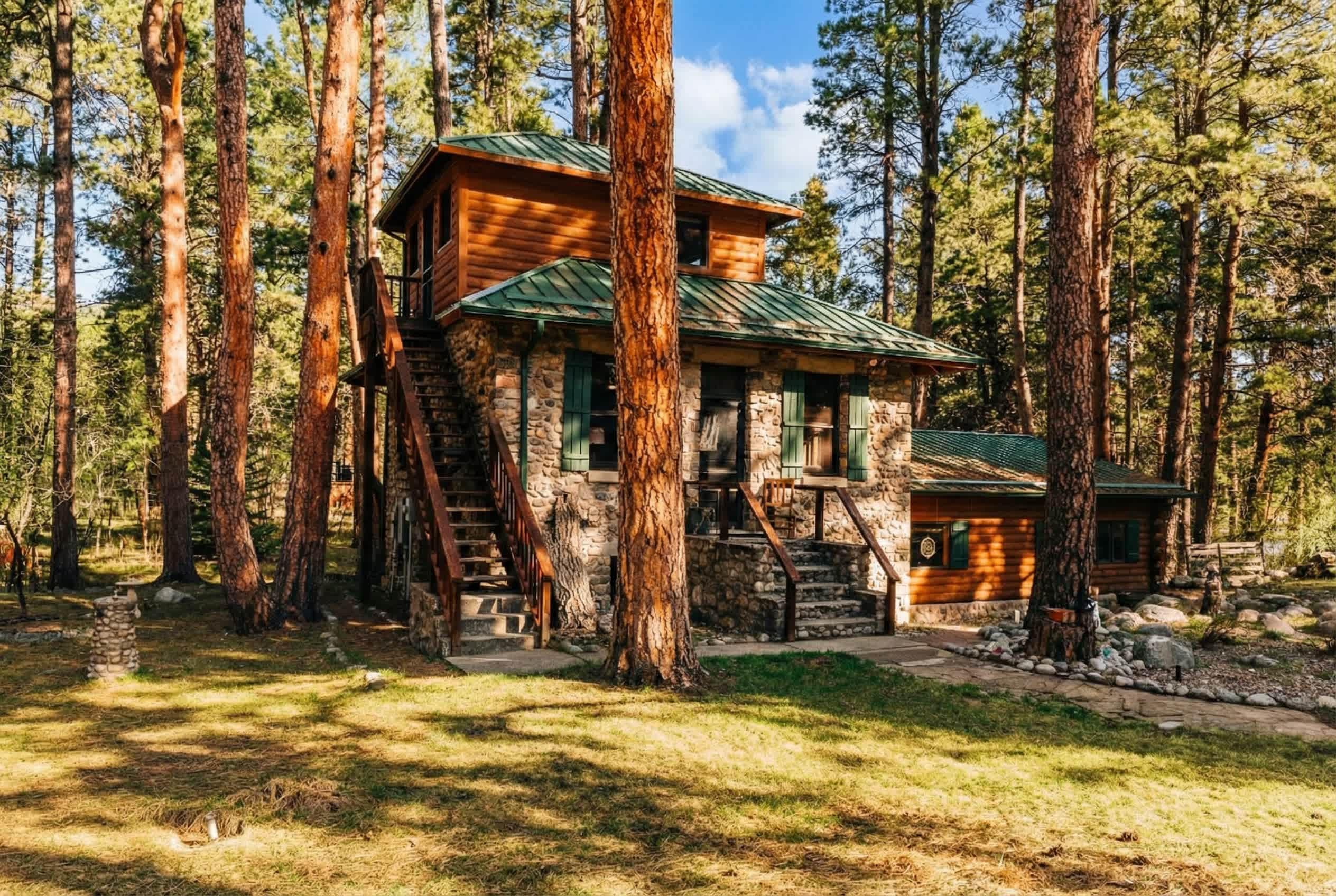
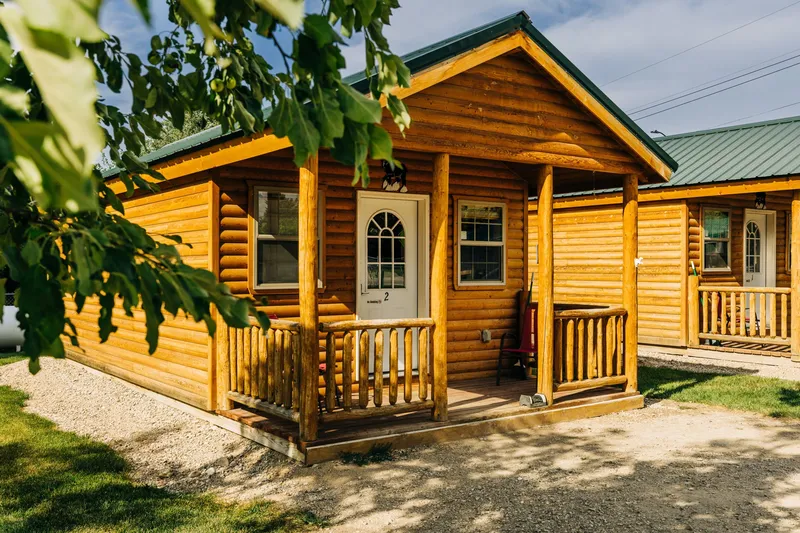
Stay in a mountain cabin. Wake up early. Walk the burn scars at dawn. Come back with dinner.